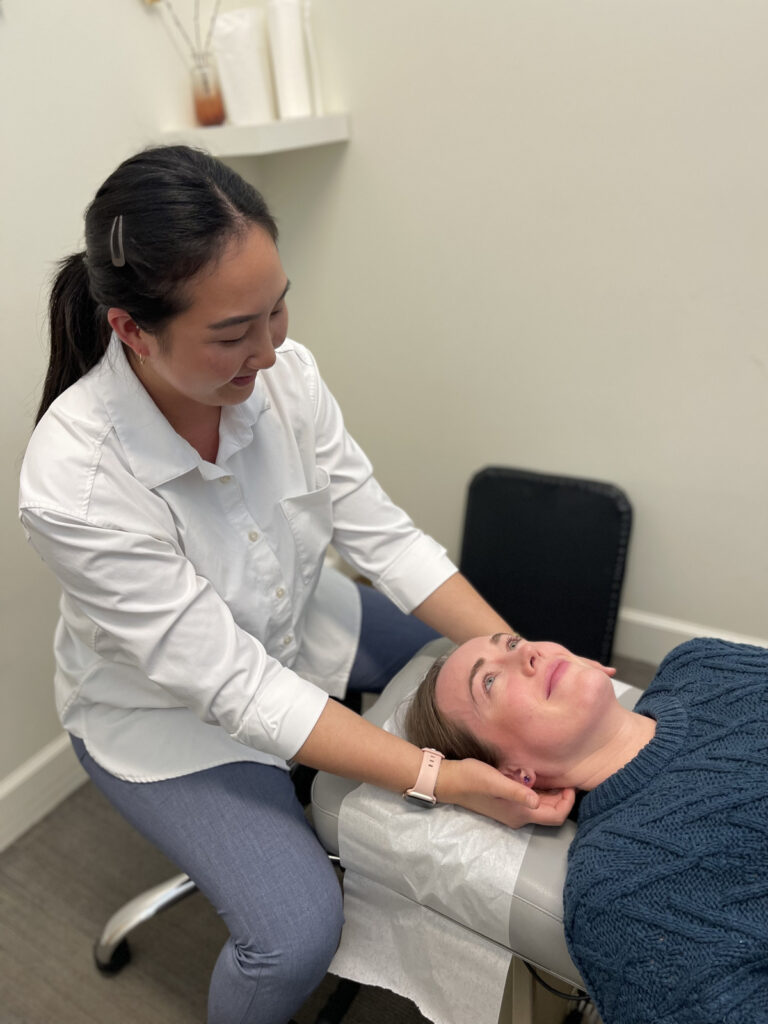


Neck pain has a way of taking over your day. Whether it starts as a dull ache after a long afternoon at your desk or wakes you up in the middle of the night, it demands your attention. And the first question most people ask is a simple one: what should I do about it? For many, the answer is to reach for a bottle of ibuprofen or a muscle relaxer and wait it out. For others, a Google search leads them toward chiropractic care. If you are trying to figure out which path makes sense for your neck pain, you are in the right place. At Reform Spine & Wellness in San Diego, Dr. Lisa Ly works with patients every day who are navigating this exact question — and the answer is more nuanced, and more empowering, than you might expect.
What Is the Core Difference Between Chiropractic Care and Medication for Neck Pain?
Medication for neck pain typically manages symptoms — it reduces inflammation, dulls pain signals, or relaxes muscle tension. Chiropractic care, on the other hand, aims to identify and address the underlying structural or mechanical cause of the pain. In simple terms: medication turns down the volume on pain, while chiropractic care works to find out why the music is too loud in the first place.
Understanding Neck Pain and Why It Happens
The neck — or cervical spine — is one of the most mobile and mechanically complex regions of the entire body. It carries the weight of your head, which averages about ten to twelve pounds, while also protecting the spinal cord and facilitating movement in nearly every direction. That combination of load-bearing and flexibility makes it vulnerable to a wide range of stresses.
Here in San Diego, many of the patients who come through the doors of Reform Spine & Wellness are dealing with neck pain rooted in some very common modern habits. Long hours working at computers, frequent smartphone use (sometimes called “tech neck”), poor sleeping positions, and unresolved postural imbalances are among the most frequent contributors. Acute injuries like whiplash from a car accident or a sports collision can also cause significant cervical strain.
Neck pain can also stem from joint dysfunction, disc problems, muscle tightness, nerve irritation, or a combination of these factors. Because the causes vary so widely, the “right” treatment genuinely depends on what is actually happening in your spine. That is why a proper evaluation — not just a guess — matters so much before deciding on a treatment path.
How Medication Approaches Neck Pain
Medications for neck pain fall into a few general categories. Over-the-counter options like NSAIDs (non-steroidal anti-inflammatory drugs, such as ibuprofen or naproxen) and acetaminophen are commonly used to reduce inflammation and manage pain. Prescription options may include muscle relaxants, stronger anti-inflammatories, or in some cases, opioid-based pain relievers for acute and severe presentations.
There are situations where medication serves a genuinely useful role. If you are dealing with severe acute pain that is preventing you from sleeping or functioning, short-term symptom relief can be an appropriate bridge. Medication can reduce the immediate burden enough to allow movement and participation in rehabilitative care. That is a legitimate application.
However, it is important to understand what medication does not do. It does not correct a misaligned vertebra. It does not restore proper joint mobility. It does not address the postural or movement patterns that led to the problem in the first place. Research consistently indicates that long-term reliance on pain medications for musculoskeletal conditions carries risks — including dependency potential with certain medications, gastrointestinal side effects from prolonged NSAID use, and the very real problem of masking pain that may be signaling something that still needs to be resolved. The American College of Physicians (ACP) has acknowledged that non-pharmacological approaches should generally be the first line of care for both acute and chronic back and neck pain.

How Chiropractic Care Approaches Neck Pain
Chiropractic care takes a fundamentally different approach. Rather than suppressing symptoms, chiropractic assessment begins with a thorough look at the whole person — their posture, movement patterns, history, lifestyle, and the specific mechanics of their spine. At Reform Spine & Wellness, Dr. Lisa Ly approaches every patient this way, because treating the root cause is the only way to create results that actually last.
The primary tool in chiropractic care is the spinal adjustment — also called spinal manipulation. When specific joints in the cervical spine are restricted or not moving as they should, adjustments are used to restore proper motion and alignment. This can reduce nerve irritation, ease surrounding muscle tension, and improve the overall function of that segment of the spine. Evidence from organizations including the NCCIH (National Center for Complementary and Integrative Health) and several peer-reviewed publications suggests that spinal manipulation can be an effective approach for reducing neck pain, particularly when combined with other supportive care.
Chiropractic care for neck pain at a practice like Reform Spine & Wellness often extends beyond the adjustment itself. Soft tissue work, rehabilitative guidance, postural correction, and lifestyle recommendations are frequently incorporated into a care plan. This reflects the whole-body, root-cause philosophy that distinguishes Reform from practices that treat only the symptomatic location.
It is also worth noting that chiropractic care is non-invasive and drug-free. For patients who are cautious about medication side effects, want to avoid surgery, or are simply looking for a conservative first-line option, chiropractic care is well-positioned as a safe and reasonable starting point. Most major clinical guidelines now recommend trying conservative care — which includes chiropractic — before escalating to more invasive interventions.
Where Chiropractic Care Fits Into Your Treatment Plan
Chiropractic care is not always an either/or decision against medication. In some cases, the most effective approach is a thoughtful combination. A patient dealing with significant acute neck pain from a recent whiplash injury, for example, may benefit from short-term anti-inflammatory support while simultaneously beginning chiropractic care to address the underlying cervical dysfunction. The two approaches can complement each other when applied appropriately and with good communication between providers.
What chiropractic care does especially well is fill the gap that medication cannot. Once the acute inflammation has settled, the work of restoring proper joint mechanics, reducing scar tissue, improving posture, and preventing recurrence begins in earnest. That is exactly the type of care Dr. Lisa Ly and the team at Reform Spine & Wellness in San Diego are focused on delivering — care that does not stop at pain relief, but continues until patients are genuinely functioning better.
For chronic neck pain — the kind that keeps coming back, or that has been present for months or even years — chiropractic care often becomes a cornerstone of a long-term wellness strategy. Rather than repeatedly masking recurring pain with medication cycles, identifying and correcting the underlying mechanical problem creates a more sustainable outcome.
Practical Tips for Managing Neck Pain at Home
While professional care is important, there are meaningful steps you can take at home to support your recovery and reduce the likelihood of neck pain returning. These recommendations are not substitutes for evaluation and treatment, but they can make a real difference in your day-to-day experience.
Postural awareness is one of the most impactful changes you can make. If you work at a desk, check that your monitor is at eye level so your head is not tilted downward for hours at a time. Your ears should sit directly over your shoulders when you are in a neutral, upright position. Small adjustments to your workstation can significantly reduce the cumulative strain on your cervical spine.
Sleep position also matters. Sleeping on your back or side with a supportive pillow that keeps your head and neck in a neutral alignment is generally better for the cervical spine than sleeping on your stomach, which requires sustained rotation of the neck. If you are a stomach sleeper dealing with recurring neck pain, this is worth addressing.
Gentle movement throughout the day is helpful. Sitting in a static position for hours — even with good posture — creates stiffness and reduces circulation to spinal tissues. Taking brief breaks to move your neck through comfortable ranges of motion and to simply stand and walk can make a measurable difference over time.
When to See a Chiropractor for Neck Pain
Many cases of neck pain are well within the scope of chiropractic care, but knowing when to act — and when to seek a different kind of help — is important. If your neck pain has persisted for more than two or three weeks despite rest and self-care, a professional evaluation is a smart next step. Chronic or recurrent neck pain that keeps returning is also a clear signal that something mechanical is worth investigating.
If your neck pain is accompanied by numbness, tingling, or weakness that radiates into your arm or hand, that can indicate nerve involvement and warrants prompt attention. Dr. Lisa Ly performs thorough assessments at Reform Spine & Wellness to determine whether chiropractic care is appropriate or whether co-management with another provider is needed.
There are red flags that should prompt you to seek medical attention right away rather than chiropractic care: neck pain following significant trauma (especially if combined with neurological symptoms), neck stiffness with high fever, unexplained weight loss, or pain that is severe and progressively worsening without any mechanical explanation. A good chiropractor will always refer out when appropriate — that is part of responsible, ethical care.
Factor |
Medication |
Chiropractic Care |
|---|---|---|
Primary Goal |
Symptom relief (pain reduction, inflammation control) |
Root-cause correction (joint mechanics, posture, function) |
Mechanism |
Chemical — affects pain receptors, inflammatory pathways |
Mechanical — restores joint motion, reduces nerve irritation |
Duration of Effect |
Short-term; symptoms return when medication ends |
Aimed at longer-term improvement through structural correction |
Side Effects |
Possible GI issues, dependency risk (some medications), drowsiness |
Generally very low risk; mild soreness occasionally after adjustment |
Invasiveness |
Non-invasive but systemic (affects whole body) |
Non-invasive and localized |
Addresses Posture/Movement |
No |
Yes — often a core component of care |
Best Suited For |
Acute symptom management, bridge care |
Mechanical neck pain, chronic or recurrent pain, postural issues |
Clinical Guidelines Support |
Recommended cautiously; ACP favors non-pharma first |
Recommended as first-line conservative care by multiple guidelines |
Myths vs. Facts About Neck Pain Treatment
Myth: Medication is the safest first option for neck pain.
Fact: Safety depends on the type of medication and duration of use. The American College of Physicians recommends non-pharmacological therapies — including spinal manipulation — as the preferred first-line approach for most musculoskeletal pain. Short-term medication use can be appropriate, but it is not automatically the safest or most effective starting point.
Myth: Chiropractic adjustments to the neck are dangerous.
Fact: This is one of the most persistent concerns, and it deserves a clear response. Serious adverse events from cervical chiropractic adjustments are considered rare. Research indicates that chiropractic care for neck pain has a favorable safety profile when performed by a trained, licensed chiropractor. As with any treatment, a thorough evaluation helps ensure that adjustments are appropriate for each individual patient.
Myth: If the pain goes away with medication, it is resolved.
Fact: Pain relief does not equal problem resolved. If the underlying mechanical issue — a restricted joint, a postural imbalance, muscle dysfunction — has not been addressed, the pain is likely to return once the medication wears off. This is one of the most common reasons people find themselves in recurring cycles of neck pain without lasting improvement.
Myth: Chiropractic care is only useful for back pain, not neck pain.
Fact: Chiropractic care has a well-established role in the management of cervical (neck) spine conditions. Evidence suggests it can be effective for mechanical neck pain, headaches arising from the neck, and related conditions. Many clinical guidelines specifically mention spinal manipulation as a treatment option for neck pain.
Myth: You have to choose between chiropractic care and conventional medicine.
Fact: These approaches are not mutually exclusive. Many patients benefit from a collaborative model where chiropractic care addresses the structural and mechanical components of their pain while their primary care physician monitors their overall health. Good providers on both sides of that equation communicate and coordinate. At Reform Spine & Wellness, Dr. Lisa Ly takes an integrative view of patient health and supports collaboration when it serves the patient’s best outcome.

Final Thoughts From Reform Spine & Wellness
Neck pain is common, but it does not have to be permanent. The path forward looks different for every person, and that is exactly why a thoughtful, individualized evaluation matters so much. There is no one-size-fits-all answer — but there are clear principles. Addressing root causes, not just symptoms. Choosing conservative, non-invasive care when possible. Empowering patients with the knowledge to make informed decisions about their own health.
Here in San Diego, Reform Spine & Wellness was built on exactly that foundation. Dr. Lisa Ly and the Reform care team are committed to being more than a pain-relief stop — they are invested in your long-term function, your quality of life, and your ability to move through the world the way you want to. Whether you are dealing with acute neck pain for the first time or have been managing a chronic issue for years, you deserve care that takes you seriously and gets to the root of the problem.
If you have been wondering whether chiropractic care might be the right fit for your neck pain — and whether it could offer something that medication alone has not — that question is worth exploring. Reform Spine & Wellness is here to help you find real answers, not just temporary relief.
Frequently Asked Questions
Is chiropractic care effective for neck pain?
Research suggests that chiropractic care, including spinal manipulation, can be an effective approach for mechanical neck pain. Multiple clinical guidelines recognize it as a first-line conservative treatment option. Results vary depending on the cause and severity of the individual’s condition, which is why a thorough evaluation is important.
How long does it take to see results from chiropractic care for neck pain?
Many patients notice meaningful improvement within several weeks of consistent chiropractic care, though timelines vary based on the nature and duration of the problem. Acute neck pain often responds more quickly than long-standing chronic conditions. Dr. Lisa Ly will discuss realistic expectations during your initial evaluation at Reform Spine & Wellness.
Can I take medication and see a chiropractor at the same time?
In many cases, yes. Medication and chiropractic care are not mutually exclusive and can be used together thoughtfully. It is always a good idea to let both your chiropractor and prescribing physician know what you are taking so your care can be coordinated appropriately.
What type of neck pain is best suited for chiropractic care?
Chiropractic care is generally well-suited for mechanical neck pain — pain caused by joint restriction, postural imbalance, muscle dysfunction, or spinal misalignment. Neck pain related to nerve involvement, disc issues, or post-injury strain can also be appropriate for chiropractic care, depending on severity and evaluation findings.
Are there any types of neck pain where chiropractic care is not appropriate?
Yes. Neck pain involving certain fractures, active infection, tumor, or severe vascular conditions requires medical management rather than chiropractic adjustment. A responsible chiropractor will screen for these contraindications during evaluation and refer to the appropriate provider when chiropractic care is not indicated.
How is chiropractic care different from massage for neck pain?
Massage therapy primarily addresses soft tissue — muscles, fascia, and connective tissue — and can be very helpful for reducing tension and improving circulation. Chiropractic care focuses on restoring proper joint mechanics and spinal alignment. The two approaches can be complementary and are sometimes used together for comprehensive results.
TL;DR
-
Medication manages neck pain symptoms but does not address the underlying mechanical cause — meaning pain often returns once it wears off.
-
Chiropractic care aims to identify and correct the root cause of neck pain, including joint dysfunction, postural imbalances, and spinal misalignment.
-
Major clinical guidelines, including those from the American College of Physicians, recommend non-pharmacological care as a first-line approach for most neck pain.
-
Chiropractic care and medication are not mutually exclusive — a thoughtful combination can be appropriate for some presentations, especially acute pain.
-
At Reform Spine & Wellness in San Diego, Dr. Lisa Ly takes a whole-body, root-cause approach to neck pain — focused on lasting results, not just temporary relief.