
Knee pain is one of those problems that sneaks up on you. Maybe it started as a little stiffness when you got out of bed in the morning. Or perhaps you felt a sharp twinge going down the stairs, or noticed your knee aching after a walk on the beach. Whatever the starting point, knee pain has a way of slowly stealing the activities you love most. Here in San Diego, CA, the team at Reform Spine & Wellness sees this every single day — people who just want to get back to hiking Torrey Pines, chasing their kids around the park, or simply moving through their day without discomfort. The good news is that chiropractic knee pain treatment offers a natural, non-invasive approach that many patients find genuinely helpful.
What Is Chiropractic Knee Pain Treatment?
Chiropractic knee pain treatment refers to the use of manual adjustments, soft tissue therapy, rehabilitative exercises, and biomechanical corrections to address the root causes of knee discomfort — rather than simply masking symptoms. It is a drug-free, conservative approach that looks at the entire musculoskeletal system, not just the painful joint itself.
- Why Knees Hurt: Understanding the Root Causes
- Signs and Symptoms That Deserve Attention
- How Chiropractic Care Fits Into Knee Pain Relief
- Practical Tips for Supporting Knee Health at Home
- When to See a Chiropractor for Knee Pain
- Knee Pain Triggers vs. Contributing Factors
- Myths vs. Facts About Chiropractic and Knee Pain
- Final Thoughts from Reform Spine & Wellness
Why Knees Hurt: Understanding the Root Causes
The knee is one of the most complex joints in the entire body. It is responsible for bearing your body weight, absorbing shock, and allowing smooth movement through activities like walking, squatting, running, and climbing. Because it does so much work, the knee is also one of the joints most vulnerable to stress, misalignment, and wear over time.
What many people do not realize is that knee pain rarely starts in the knee alone. The knee sits at a crossroads between the hip above and the ankle below. When either of those joints is not moving or aligned properly, the knee often picks up the extra strain. A rotated pelvis, a tight hip flexor, flat arches in the feet, or even tension in the lower back can all shift mechanical stress onto the knee joint in ways that gradually add up.
Some of the most common causes of knee pain that Dr. Lisa Ly and the team at Reform Spine & Wellness evaluate include:
- Patellofemoral syndrome (runner’s knee), where the kneecap does not track properly in its groove
- Iliotibial (IT) band tightness, which pulls on the outer knee during movement
- Meniscus irritation or degeneration, often from repetitive loading or rotation
- Osteoarthritis, which involves gradual breakdown of cartilage inside the joint
- Patellar tendinopathy, common in active individuals who run or jump frequently
In each of these cases, the pain you feel in your knee may be closely linked to how your entire lower body kinetic chain is functioning. That perspective — looking at the whole picture rather than just the painful spot — is what sets chiropractic evaluation apart.
Signs and Symptoms That Deserve Attention
Not every ache in the knee signals the same problem, which is why careful evaluation matters so much. Some patients describe a dull, nagging soreness that worsens after sitting for long periods. Others feel sharp pain specifically when bending, kneeling, or descending stairs. A grinding or clicking sensation during movement, swelling around the joint, or a feeling of instability — like the knee might give way — are all signs that something in the joint or surrounding structures is under stress.
Morning stiffness that loosens up within thirty minutes or so is often associated with osteoarthritis or general deconditioning. Pain that is sharp and immediate during a specific movement may point more toward a structural issue like a meniscus problem or ligament strain. And pain that radiates down from the hip or up from the foot often suggests a biomechanical contributor outside the knee itself.
Here in San Diego, many active residents push through knee discomfort far longer than they should, assuming it will resolve on its own. While mild soreness after a new workout sometimes does settle down, persistent or worsening knee pain is your body telling you that something needs attention — not toughing out.
How Chiropractic Care Fits Into Knee Pain Relief
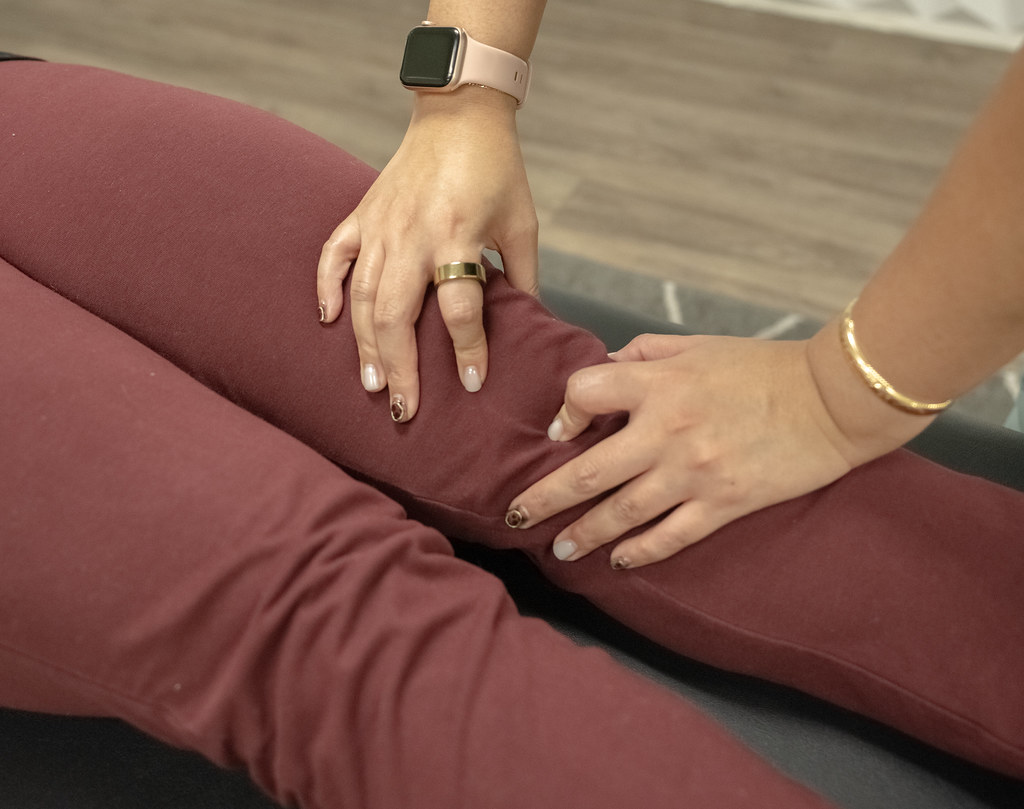
Chiropractic knee pain treatment works on a simple but powerful principle: when joints are aligned and moving as they should, the body is far better equipped to heal and function well. Dr. Lisa Ly at Reform Spine & Wellness takes a whole-body approach, which means an evaluation for knee pain will often include a careful look at the spine, pelvis, hips, and feet — because all of those structures influence how load is distributed through your knees.
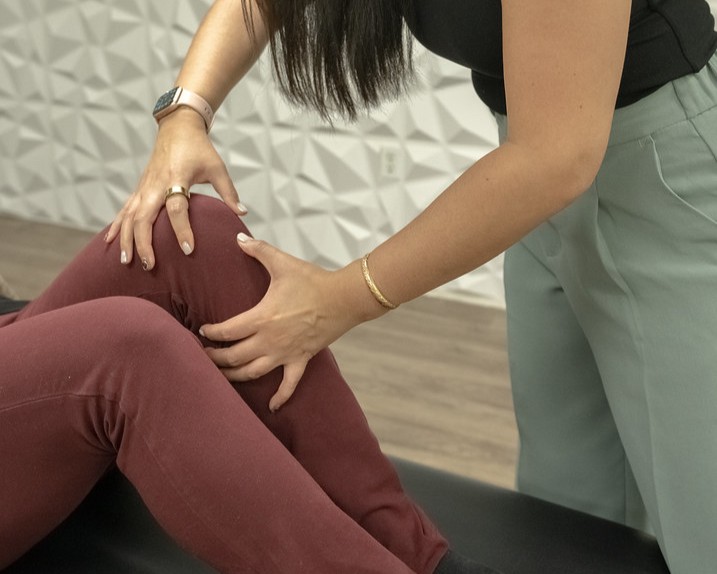
One of the core tools in chiropractic care is joint manipulation or mobilization. When applied to the knee itself, surrounding hip joints, or the lumbar spine and pelvis, these techniques help restore normal range of motion, reduce joint stiffness, and encourage the nervous system to modulate pain signals more effectively. Research published through organizations like the National Center for Complementary and Integrative Health (NCCIH) and reviewed in systematic reviews suggests that manual therapy can be a helpful component of conservative knee pain management, particularly for conditions like osteoarthritis and patellofemoral pain.
Soft tissue work is another important element. Tight muscles around the knee — including the quadriceps, hamstrings, calves, and IT band — can pull the joint out of its ideal alignment and create ongoing friction or irritation. Myofascial release and targeted soft tissue therapy help reduce that tension, allowing the joint to move more freely and with less discomfort.
Rehabilitative exercises are equally important. Strengthening the muscles that support the knee — particularly the glutes, quadriceps, and hip stabilizers — reduces the mechanical burden on the joint during daily activities. Dr. Lisa Ly incorporates movement coaching and corrective exercises into care plans at Reform Spine & Wellness because lasting knee pain relief requires both restoring proper joint mechanics and building the muscular support structure around it.
Chiropractic care also takes into account gait patterns and foot mechanics. Overpronation (rolling inward of the foot) is extremely common and places persistent rotational stress on the knee. Addressing foot mechanics — sometimes with gait retraining or supportive recommendations — can make a meaningful difference in how the knee tolerates everyday activity.
Practical Tips for Supporting Knee Health at Home
There is a lot you can do between visits to support your knee health and complement whatever care you are receiving. Small, consistent habits tend to make a bigger difference than dramatic interventions.
Movement is medicine for the knee. Gentle, low-impact activity — like walking on level surfaces, swimming, or cycling — keeps the joint lubricated and the surrounding muscles active. Sitting for extended periods without moving stiffens the knee and reduces circulation to the area. If your job involves a lot of desk time, try standing up and gently bending your knees every thirty to forty-five minutes.
Pay attention to how you rise from chairs and how you descend stairs. Leading with a strong, controlled movement — rather than dropping your weight suddenly — significantly reduces peak stress on the knee joint. Strengthening your glutes and quads makes these transitions much more comfortable over time.
Footwear matters more than most people realize. Worn-out shoes or footwear without adequate support can quietly worsen knee mechanics with every step you take. Here in San Diego, where many residents spend time in sandals or flip flops, this is a particularly common contributor to ongoing knee discomfort.
Anti-inflammatory lifestyle habits — including adequate sleep, staying well-hydrated, and an overall balanced diet rich in vegetables, lean proteins, and healthy fats — support the body’s natural healing processes. While chiropractic care is not a nutritional counseling service, these foundational wellness habits work hand-in-hand with hands-on care.
When to See a Chiropractor for Knee Pain
A good general guideline is this: if knee pain has been present for more than a week or two, is interfering with your daily activities, or keeps returning after periods of rest, it is worth getting a professional evaluation. Catching biomechanical contributors early — before compensatory patterns become deeply ingrained — tends to lead to faster and more complete resolution.
At Reform Spine & Wellness, Dr. Lisa Ly commonly works with patients who have been managing knee pain for months or even years. It is never too late to start addressing the underlying contributors, even if the problem feels long-standing.
That said, there are symptoms that warrant urgent medical evaluation rather than chiropractic care. These include significant trauma to the knee (such as a fall or sports injury involving a “pop” sound), severe swelling that develops rapidly, the knee locking up and becoming impossible to straighten, signs of infection (warmth, redness, and fever together), or any vascular symptoms like calf pain and swelling that could suggest a blood clot. In those situations, please seek emergency or urgent medical care right away.
Knee Pain Triggers vs. Contributing Factors
| Common Knee Pain Trigger | Biomechanical Contributing Factor | Chiropractic Focus Area |
|---|---|---|
| Runner’s knee (patellofemoral pain) | Poor patellar tracking, weak hip stabilizers | Hip alignment, quad/glute strengthening, patellar mobilization |
| IT band syndrome | Hip tightness, overpronation, training errors | Hip and pelvis mobility, soft tissue release, gait assessment |
| Knee osteoarthritis | Joint degeneration, poor load distribution, deconditioning | Joint mobilization, movement rehabilitation, load management |
| Patellar tendinopathy | Repetitive strain, tight quadriceps, training overload | Soft tissue therapy, progressive loading exercises |
| Medial knee pain | Overpronation, valgus knee mechanics (knees caving in) | Foot mechanics, hip strengthening, gait retraining |
Myths vs. Facts About Chiropractic and Knee Pain
Myth: Chiropractors only treat back and neck pain.
Fact: Chiropractors are trained to evaluate and treat the entire musculoskeletal system, including extremity joints like the knee, hip, shoulder, and ankle. Dr. Lisa Ly at Reform Spine & Wellness routinely addresses knee conditions as part of comprehensive musculoskeletal care.
Myth: If you have knee arthritis, there is nothing that can help short of surgery.
Fact: Evidence indicates that conservative care — including manual therapy, targeted exercise, and movement rehabilitation — can meaningfully reduce pain and improve function in people with knee osteoarthritis. Many patients experience significant improvement without ever needing surgical intervention.
Myth: Rest is always the best treatment for knee pain.
Fact: Complete rest can actually slow recovery in many cases. Controlled, appropriate movement keeps the joint lubricated, maintains muscle strength, and promotes tissue healing. The goal is to find the right type and amount of activity for your specific situation — not to stop moving altogether.
Myth: Chiropractic adjustments to the knee are painful or dangerous.
Fact: Knee mobilization and manipulation techniques used by trained chiropractors are generally gentle and well-tolerated. Your chiropractor will always work within a comfortable range and communicate with you throughout the process. Safety and patient comfort are top priorities at Reform Spine & Wellness.
Myth: Knee pain is just a natural part of aging that you have to accept.
Fact: While some degree of joint change does occur with age, pain and significant loss of function are not inevitable. Many older adults respond very well to conservative chiropractic care and remain active, comfortable, and mobile well into their later years.
Final Thoughts from Reform Spine & Wellness
Knee pain does not have to be your new normal. Whether you are a weekend warrior, a busy parent, a retiree who wants to stay active, or someone who has simply been dealing with nagging knee discomfort for too long, there is a real path forward — and it does not have to involve medication or surgery as a first step.
At Reform Spine & Wellness in San Diego, CA, Dr. Lisa Ly takes the time to understand what is truly driving your knee pain. That means looking beyond the joint itself, identifying biomechanical contributors throughout the lower body, and building a care plan that is tailored to your life and your goals. San Diego is an incredibly active community, and the team at Reform Spine & Wellness is committed to helping residents here move better, feel better, and stay engaged in the activities that make life enjoyable.
If knee pain has been slowing you down, consider reaching out to Reform Spine & Wellness. A thorough evaluation is always the best starting point — and it may be the most important step you take toward lasting relief.
Frequently Asked Questions
Can a chiropractor actually help with knee pain?
Yes. Chiropractors are trained to evaluate and treat musculoskeletal conditions affecting the knee and surrounding joints. Research suggests that manual therapy, corrective exercises, and biomechanical corrections can help reduce knee pain and improve function, particularly for conditions like patellofemoral syndrome and osteoarthritis.
How many chiropractic visits does it take to feel improvement in knee pain?
This varies considerably depending on the underlying cause, how long the problem has been present, and the individual patient’s overall health. Some patients notice meaningful improvement within a few visits, while chronic or complex cases may require a longer course of care. Dr. Lisa Ly will discuss realistic expectations during your initial evaluation at Reform Spine & Wellness.
Is chiropractic knee pain treatment safe for older adults?
Chiropractic care is generally considered safe for older adults when performed by a trained professional who tailors techniques to the individual. Gentler mobilization approaches are commonly used when bone density or joint integrity is a consideration. A thorough health history is always taken before care begins.
What is the difference between chiropractic care and physical therapy for knee pain?
Both are conservative, non-surgical approaches to knee pain that emphasize movement and function. Chiropractic care typically places greater emphasis on joint alignment, spinal and pelvic mechanics, and the relationship between the nervous system and musculoskeletal function. The two disciplines can also work very well together as part of a comprehensive care plan.
Can chiropractic care help knee pain caused by a sports injury?
Chiropractic care can be an effective part of recovery from many sports-related knee injuries, particularly those involving soft tissue strain, biomechanical dysfunction, or reduced range of motion. Serious structural injuries — such as complete ligament tears — may require co-management with an orthopedic specialist, and your chiropractor will refer you appropriately if needed.
Does knee pain always mean there is damage inside the joint?
Not necessarily. Many cases of knee pain are driven by muscle imbalances, poor movement mechanics, joint stiffness, or referred tension from the hip or lower back — without any significant structural damage inside the knee. A thorough chiropractic evaluation helps identify what is actually causing your symptoms so care can be directed appropriately.
TL;DR Summary
- Knee pain is often driven by whole-body biomechanical factors — not just what is happening inside the knee itself.
- Chiropractic knee pain treatment uses manual therapy, soft tissue work, and corrective exercises to address root causes rather than masking symptoms.
- At Reform Spine & Wellness in San Diego, CA, Dr. Lisa Ly evaluates the full lower body kinetic chain — including the spine, hips, and feet — to build an individualized care plan.
- Lifestyle habits like appropriate movement, supportive footwear, and consistent activity play an important role in long-term knee health.
- Persistent, worsening, or activity-limiting knee pain deserves professional evaluation — and conservative chiropractic care is a reasonable first step for many people.